



A Collaborative Triumph for Florence’s Cultural Heritage
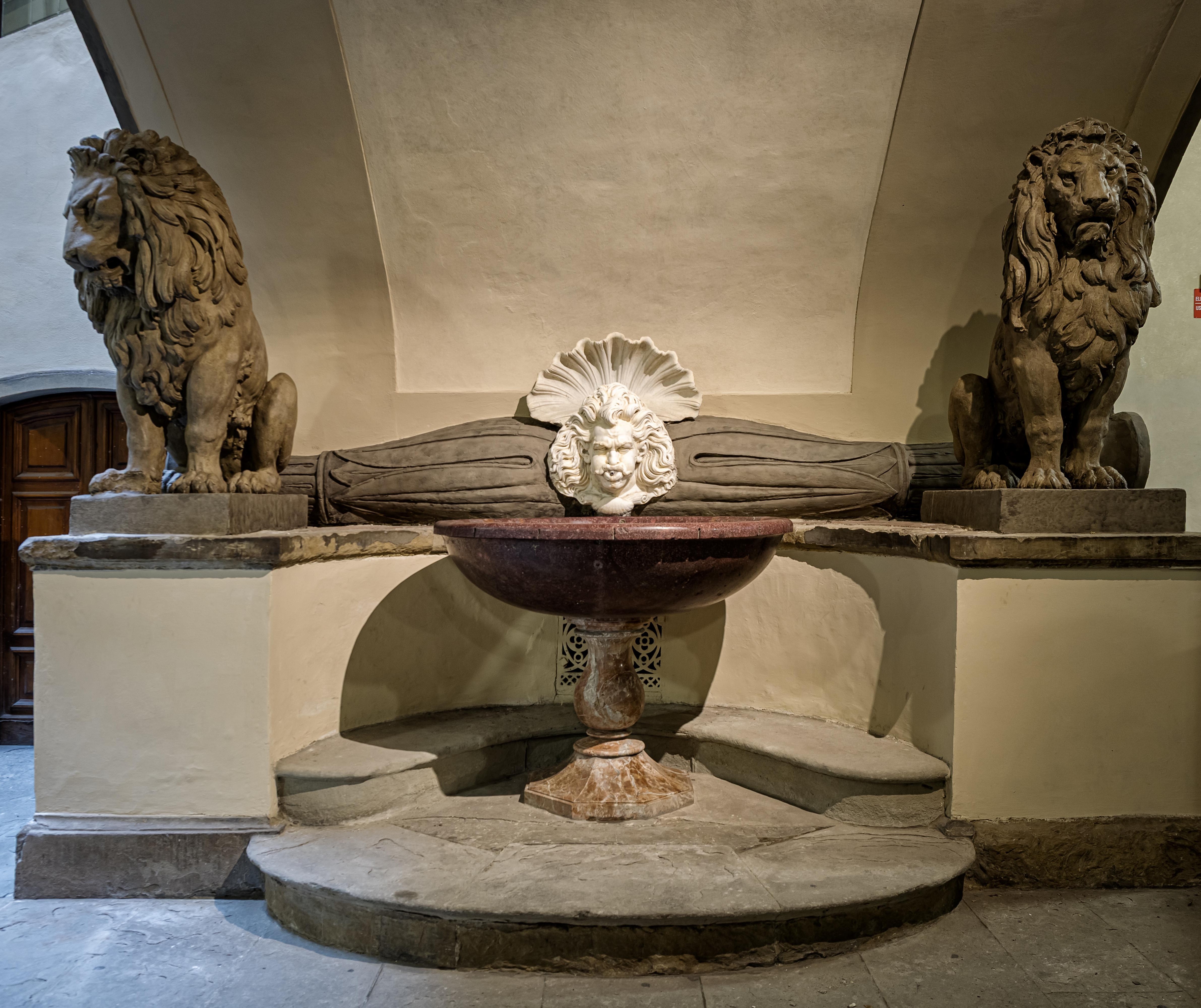
The restoration works of the Fonti dei Leoni and the Cortile della Dogana within Florence’s iconic Palazzo Vecchio have reached their official completion. Valued at 50,000 euros and executed over a span of 60 days, this significant preservation project was made possible through a technical sponsorship by the Scuola del Cuoio under FLIC – Florence I Care, the City of Florence’s municipal program designed to foster public-private partnerships for the protection and enhancement of the city’s rich cultural heritage.
The meticulous restoration covered the fountains and basins, the sculptural groups of lions, the decorative mascarons, the architectural surfaces of the courtyard, and the marble statue of the Electress Palatine, Anna Maria Luisa de’ Medici. Led by an expert team—including architect and project director Rita Balzano, restorer Barbara Bersellini, and executing firms Edis S.n.c. and Ireco S.r.l.—the project involved a rigorous assessment of materials, controlled cleaning techniques (including specialized laser technology for the mascarons and fountains), localized consolidation, and stratigraphic tests that successfully brought to light the original chromatic hues hidden beneath layers of subsequent alterations.
An unexpected and fascinating historical discovery emerged during the intervention: contrary to long-held beliefs that two of the lions were crafted from stone, all four lion sculptures were revealed to be period plaster casts featuring internal metal structures, adding a valuable layer of depth to the historical understanding of the artworks.
Honoring a Legacy: The Vision of Tommaso Melani
Spearheaded by Laura, Francesca, and Barbara Gori, alongside Filippo and Beatrice Parri Gori, the Scuola del Cuoio proudly supported this endeavor in loving memory of Tommaso Melani, son of Laura Gori and a vital pillar of the school’s legacy, who passed away prematurely in New York.
The initiative bridges civic duty with a profound personal tribute. As Barbara Gori, CEO of the Scuola del Cuoio, recalled, the project was inspired by a conversation with Tommaso in April, during which he reflected on how citizens in the United States actively contribute to preserving their cultural heritage, viewing active participation in the care of historic places as an essential expression of community responsibility.
During the inauguration, Tommaso’s daughter, Isabella Melani, unveiled a commemorative plaque dedicated to her father next to the Fonti dei Leoni, expressing deep emotion and gratitude for the affection and esteem shown by the community.
Cultural Councillor Giovanni Bettarini praised the initiative during the presentation, emphasizing that protecting Palazzo Vecchio safeguards the history and identity of Florence. He commended the Gori family and the Scuola del Cuoio for translating memory into a concrete, community-driven contribution through the Florence I Care framework. Beatrice Parri Gori further highlighted the family’s ongoing commitment to collaborating with the City of Florence, building upon previous restoration efforts such as the Noviziato at Santa Croce and looking forward to future heritage projects.
Historical Context: The Cortile della Dogana and the Scuola del Cuoio
Dating back to 1494, the Cortile della Dogana is one of the three historic courtyards of Palazzo Vecchio. Designed by the architect and sculptor Simone del Pollaiolo (known as Il Cronaca), its robust architectural structure serves the vital function of supporting the monumental Salone dei Cinquecento on the floor above. Its modern name derives from the customs offices (dogana) housed there during the Grand Duchy period.
Tucked beneath the stair ramps leading to the monumental quarters, the two symmetrical Fonti dei Leoni likely date back to the second half of the 19th century—the era when Florence served as the capital of Italy (1865–1871). The lion motif pays homage to the Marzocco, the historic heraldic lion holding the shield with the Florentine lily, embodying the civic authority and identity of the city. The courtyard is also home to the 2023 marble statue of Anna Maria Luisa de’ Medici, the Electress Palatine whose historic Pact of Family in 1737 ensured that the Medici art collections remained permanently in Florence.
The Scuola del Cuoio, situated within the monumental complex of Santa Croce, maintains a storied history deeply intertwined with Florentine artisan tradition. Founded after the Second World War through a collaboration between the Franciscan Friars of Santa Croce and the Gori and Casini families—renowned artisans since the 1930s—the school initially trained war orphans in the practical mastery of leathercraft. Over the decades, it has evolved into a world-renowned institution for traditional Florentine leather goods, luxury craftsmanship, and bespoke artisan education.


